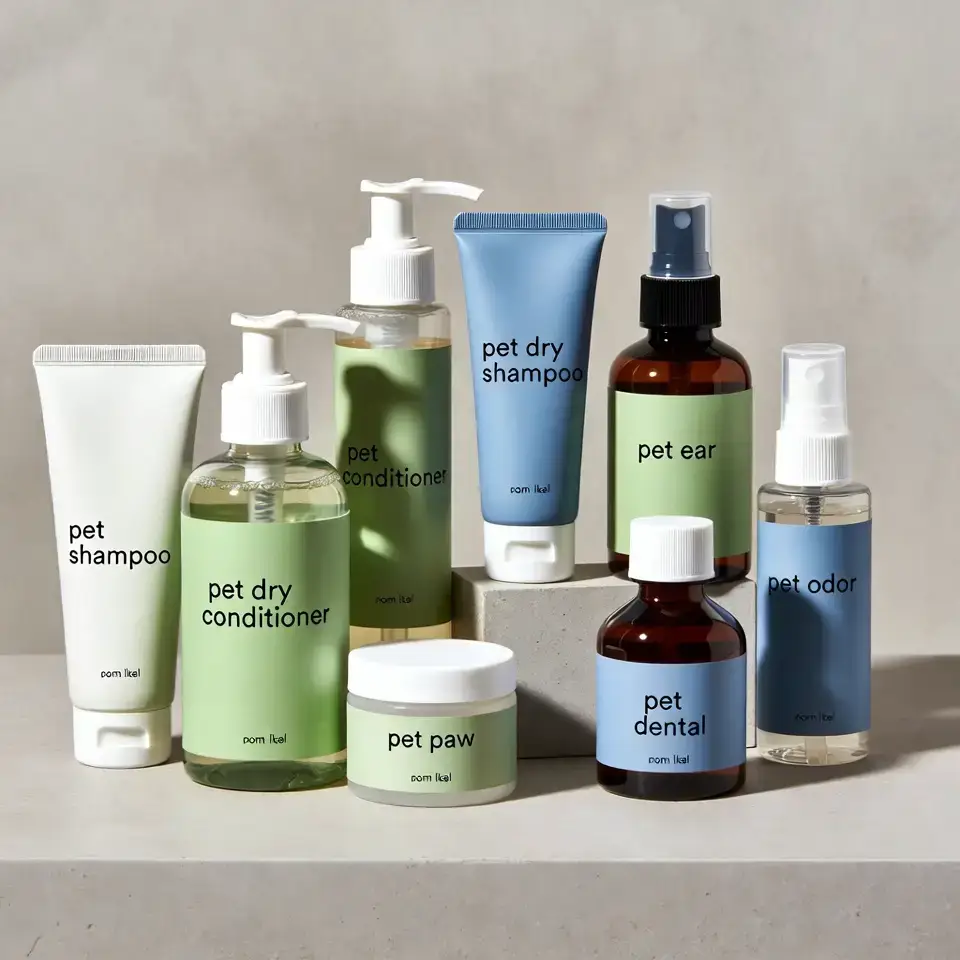
Sustainable Packaging Trends in Personal Care for 2026
Sustainability is no longer optional for personal care brands. Consumers, retailers, and regulators all expect progress. In 2026, the conversation has shifted from “should we do sustainable packaging?” to “which sustainable packaging strategies actually work — for our product, our price point, and our customers?”
This article examines the seven trends that are reshaping personal care packaging this year, with practical guidance on how to evaluate each for your brand.
The Landscape: Why 2026 Is Different
A few factors have converged to make sustainability a hard requirement rather than a marketing differentiator:
- Regulatory pressure: The EU’s PPWR (Packaging and Packaging Waste Regulation) mandates that all packaging be recyclable by 2030, with mandatory recycled content thresholds kicking in starting 2030. Similar regulations are emerging in California, Canada, and parts of Asia.
- Consumer behavior: A 2025 Mintel survey found that 67% of personal care buyers consider sustainability when choosing between two similar products. For under-35 buyers, the figure rises to 78%.
- Retailer requirements: Sephora’s Clean + Planet Positive program, Ulta’s Conscious Beauty, and Target’s Zero Waste initiatives now require brands to meet specific sustainability criteria to be sold in those channels.
- Material economics: PCR (post-consumer recycled) plastics have dropped to within 10-20% of virgin resin pricing in many categories, making the sustainability case primarily about positioning, not cost.
The result is that even mainstream brands — not just premium naturals — are redesigning their packaging.
Trend 1: PCR Plastics at Scale
Post-Consumer Recycled (PCR) plastic is now widely available across packaging categories. Common options:
- rPET (recycled PET) — available in clear, amber, and green tints; used for bottles and jars
- rHDPE (recycled HDPE) — common for tubes and caps
- rPP (recycled polypropylene) — emerging for caps and closures
What to Know
PCR pricing has dropped dramatically. In 2022, rPET was typically 30-50% more expensive than virgin PET. Today, the premium is often 10-20%, and for some categories, pricing is at parity.
The visual characteristics of PCR are slightly different from virgin resin — slight yellowing in clear bottles, occasional black specks, and minor variations between lots. Most consumers accept these as proof of recycled content. For premium brands that demand perfect clarity, food-grade rPET with a clarifying additive is now available at higher cost.
Practical Guidance
Specify food-grade PCR for any product that touches skin. PCR from curbside collection streams may contain trace contaminants from prior use. Food-grade PCR has been processed to meet FDA and EU food-contact standards.
Use 30% PCR as a baseline, working toward 50-100% over time. Many brands start with 30% because it offers meaningful sustainability benefits without significant visual changes. Higher percentages may require formulation adjustments or acceptance of slightly different aesthetics.
Trend 2: Refillable and Modular Designs
Refillable packaging reduces material use dramatically. Common formats in personal care:
- Pump bottles with refill pouches — the outer bottle is kept; the inner pouch is replaced. Material reduction: 60-70%.
- Jars with replaceable inner containers — the outer jar (often ceramic or heavy glass) is permanent; the inner liner or pod is replaced.
- Stick packaging with replaceable cartridges — emerging in deodorant and serum categories.
- Modular airless systems — the pump mechanism stays, the product reservoir is swapped.
The Trade-Off
Refillable systems require:
- Higher upfront packaging cost (the permanent outer component)
- Consumer education (the refill has to be intuitive)
- Robust supply chain for refill distribution
The cost premium is typically 15-40% on the first purchase, but the refill-only component is 30-50% cheaper than the full system — making refill attractive for repeat customers.
Brands Doing It Well
Several indie brands have built identities around refillable systems. The success factor is always the same: the refill must be easier than buying new packaging, and the price difference must reward the behavior.
Trend 3: Mono-Material Packaging
Multi-material packaging (PET bottle + PP cap + aluminum pump) is hard to recycle because the components need to be separated. Mono-material packaging — where every component is made from a single polymer — is gaining traction:
- All-PP systems (bottle + cap + pump all polypropylene)
- All-PE systems (common for tubes)
- All-glass systems (for premium positioning)
Limitations
Mono-material doesn’t mean easy-to-recycle. PP and PE require different recycling streams in most municipalities. The benefit is at the sorting facility: a single-polymer package doesn’t need to be disassembled before processing.
When It Makes Sense
Mono-material packaging is most valuable for:
- Brands sold in regions with advanced recycling infrastructure (Germany, the Netherlands, parts of Japan)
- Products where the plastic-to-product ratio is already low (concentrated formulas, sample sizes)
- Brands making a long-term commitment to a single package design (mono-material packaging is harder to design than multi-material)
Trend 4: Airless Technology Goes Mainstream
Airless bottles protect formulations from oxidation and microbial contamination, extending shelf life and reducing the need for strong preservatives. They also enable higher active-ingredient concentrations.
Sustainability Angle
The sustainability case for airless:
- Less product waste — users can extract nearly 100% of the formula
- Longer shelf life — fewer products discarded due to expiration
- Lower preservative load — better for sensitive skin and the environment
Cost Considerations
Airless packaging has historically been 2-5x the cost of standard pump bottles. In 2026, the premium has narrowed to 1.5-2x, and some standard sizes are at near-parity. For formulas priced above $15 retail, airless is now economically viable.
Trend 5: Glass Renaissance (in Specific Categories)
Premium brands are returning to glass for its recyclability, perceived quality, and weight. Modern lightweight glass options reduce shipping carbon footprint while preserving the tactile experience.
Where Glass Works
- Serums and face oils (small sizes, premium positioning)
- Fragrance (the traditional material)
- Bath and body oils (the weight feels luxurious)
Where Glass Doesn’t Work
- Travel sizes (weight, breakage risk)
- Shower products (slip hazard if dropped)
- High-velocity retail channels (theft target)
The Recycled Glass Question
Recycled glass (cullet) is increasingly used in cosmetic bottles, typically at 30-50% recycled content. Higher percentages are possible but require careful color management.
Trend 6: Reduction as a Strategy
The most sustainable package is the one that doesn’t exist. In 2026, brands are reducing packaging in three ways:
- Eliminating outer cartons — many products ship without a secondary box
- Removing leaflets — moving ingredient lists and usage instructions to QR codes on the package
- Compressing formats — concentrated formulas in smaller packages (50ml instead of 100ml)
The Consumer Perception Question
Some consumers equate small packaging with low value. The brands doing this well use language (“30% concentrate — use less per application”) to explain the format. Concentrated formulas that deliver more applications per ml justify smaller packaging.
Trend 7: Bio-Based and Compostable Materials
Bio-based plastics (PLA, PHA, sugarcane-based polyethylene) and paper-based packaging (molded pulp, mycelium) are emerging but face significant limitations:
- PLA requires industrial composting facilities that don’t exist in most markets
- PHA is more readily biodegradable but expensive and limited in supply
- Molded pulp is excellent for shipping protection but not for primary packaging of liquids
When Bio-Based Makes Sense
For solid products (bar soap, bath bombs, deodorant sticks) and secondary packaging (gift boxes, shippers), bio-based and compostable materials work well. For liquid products in primary packaging, the trade-offs (cost, performance, end-of-life infrastructure) still favor PCR or mono-material conventional plastics.
Building Your Sustainability Roadmap
You don’t need to do everything at once. A practical three-year roadmap:
Year 1: Foundation
- Audit current packaging for recyclability, recycled content, and material mix
- Move to 30% PCR in bottles where possible
- Eliminate unnecessary outer cartons and leaflets
- Set up supplier metrics for recycled content and recyclability
Year 2: Optimization
- Increase PCR content to 50% in major SKUs
- Introduce refillable options for hero products
- Redesign multi-material packages for mono-material where possible
- Publish a sustainability report
Year 3: Innovation
- Test airless packaging for premium SKUs
- Pilot refill programs in major markets
- Explore bio-based materials for solid products and secondary packaging
- Set science-based targets for packaging carbon footprint
How Timvive Supports These Trends
Our packaging factory works with PCR, mono-material, and airless formats across all 13 categories. Our in-house design team can help you evaluate trade-offs and develop a roadmap that fits your product, brand positioning, and budget.
If you are planning a sustainability-focused packaging refresh, contact our packaging team to discuss options. We can provide samples of PCR, mono-material, and airless formats within 7-10 days.
Written by
Packaging Team
Sharing insights on personal care manufacturing, quality standards, and sustainable practices.