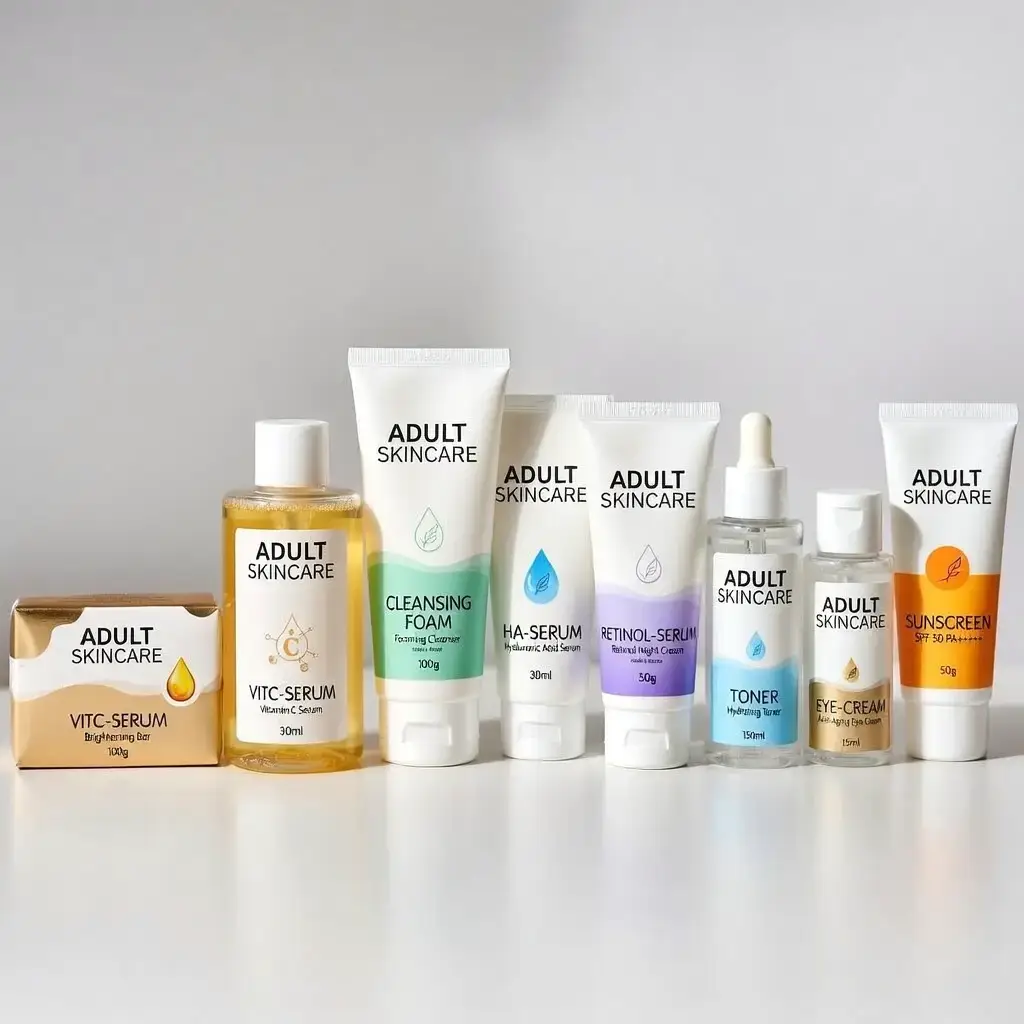
How to Choose the Right Cosmetic Manufacturer for Your Brand
Selecting a contract manufacturer is one of the most consequential decisions a personal care brand will make. The right partner protects your timeline, your formulation, and your reputation. The wrong one can cause delayed launches, formulation drift, and costly regulatory issues.
This guide distills what to evaluate, what to avoid, and what to ask before you commit.
Why This Decision Matters More Than You Think
A personal care brand’s relationship with its manufacturer typically lasts years — sometimes decades. Once you commit to a partner, you build tooling around their packaging standards, validate formulations in their lab, and train your supply chain to expect their lead times. Switching manufacturers mid-stream costs you tooling charges (often tens of thousands of dollars), reformulation time (3-6 months), and shelf time at retailers.
The cost of getting it wrong is real. The cost of getting it right is a competitive advantage.
The 8 Criteria That Actually Matter
1. Relevant Certifications
Required certifications vary by market:
- United States: FDA facility registration, plus ISO 22716 or GMPC for retailer compliance.
- European Union: CPNP notification, ISO 22716, and compliance with Regulation 1223/2009.
- China: NMPA (formerly CFDA) registration for special-purpose cosmetics.
- Retailer-specific: Walmart, Target, Costco, and Tesco each have additional requirements.
Ask for copies of current certificates with validity dates. A reputable manufacturer shares these documents freely.
2. In-House R&D Capability
A true OEM/ODM partner has formulators on staff, not just purchasing agents who relay your brief to a third-party lab. Signs of real R&D capability:
- On-site lab with HPLC, viscometer, pH meter, and stability chambers
- Formulators with 5+ years of experience in your product category
- Willingness to share formulation documentation, INCI lists, and stability data
- Reverse-engineering capability (you send a reference product, they replicate it)
3. Manufacturing Capacity and Flexibility
Ask about:
- Batch size range: Can they handle your initial 5,000-unit run? Can they scale to 100,000+ without changing lines?
- Number of production lines: More lines = less queue time during peak season (typically August-October).
- Cross-contamination controls: How do they prevent fragrance transfer between an unscented moisturizer and a strongly perfumed body butter?
- Cleaning validation: Documented procedures for switching between product types.
4. Packaging In-House vs. Outsourced
Outsourced packaging means your manufacturer is buying bottles from Trader A, caps from Trader B, and pumps from Trader C — and paying middleman markup on all of it. In-house packaging (or strong direct relationships with mold owners) usually means:
- Lower unit cost (10-25% savings on packaging alone are common)
- Faster problem resolution when a mold has a defect
- More flexibility on custom colors, finishes, and decorative techniques
5. Quality Control Process
A serious QC process has four documented stages:
- Incoming inspection of every raw material lot
- In-process monitoring at defined checkpoints during production
- Finished product testing before release (appearance, pH, viscosity, fragrance, microbiology)
- Stability testing of retained samples under accelerated and real-time conditions
Ask to see the QC documentation for a recent batch of a product similar to yours.
6. Project Management and Communication
The single most common complaint about China-based manufacturers is poor communication. Test this before signing a contract:
- Does the sales team respond in English within one business day?
- Will you have a dedicated account manager, or are you one of dozens of inquiries in a shared inbox?
- How are samples, artwork changes, and shipping updates communicated?
- What time zone does your account manager work in, and how do they handle after-hours emergencies?
7. Compliance and Documentation Support
Your manufacturer should provide, for every shipment:
- Certificate of Analysis (CoA) with test results for your specific batch
- Certificate of Origin
- MSDS (Material Safety Data Sheet) for each component
- INCI list in the format required by your market
- Allergen and IFRA statements
If your manufacturer pushes back on providing these documents, walk away.
8. Financial Stability
A manufacturer that is financially stressed will cut corners on raw materials, delay equipment maintenance, and pressure you into larger orders. Ask for:
- Years in business (under 3 years = higher risk)
- Annual revenue range (or at least order of magnitude)
- Major client references
- Export license status
12 Red Flags to Watch For
- No certifications, or certifications that have expired — easy to verify, disqualifying if missing.
- Reluctance to share facility photos or arrange a visit — transparency is non-negotiable.
- No signed NDA offered — your formula is your IP.
- MOQs much higher than industry standard (50,000+ for finished products in most categories).
- Sample pricing at “free” but shipping fees 5x what they should be — a common bait-and-switch.
- No English-speaking staff in technical roles — sales can speak English, but if the formulator doesn’t, misunderstandings are inevitable.
- Lead time promises that seem too good to be true — if they quote 15 days for a custom formula + tooling + production, ask why your other suppliers quote 60.
- No references from clients in your target market — exporting to Brazil is very different from exporting to Germany.
- Pressure to skip stability testing to “save time” — you will pay for this later in product recalls and returns.
- Vague answers about ingredient sourcing — “we source from the best suppliers” is not an answer.
- Refusal to provide a reference sample of an existing product — they should be proud of what they make.
- Pricing significantly below all competitors — there is always a reason, and it is rarely good for you.
Sample Request for Information (RFI)
Send this to every candidate manufacturer. The answers will reveal most of what you need to know:
1. Company name, years in operation, and ownership structure.
2. List of current certifications with certificate numbers and expiry dates.
3. Number of full-time employees, split between R&D, production, QC, and administration.
4. Annual production capacity (units or kg) and current utilization rate.
5. List of major export markets and approximate split by region.
6. Minimum order quantities by product category.
7. Standard lead times for: sample production, mass production, repeat orders.
8. List of in-house testing capabilities.
9. Names and contact details of three reference customers in my target market.
10. Whether you offer formulation services in addition to OEM manufacturing.
11. Standard payment terms.
12. Whether you handle export documentation and freight forwarding.
A serious manufacturer will respond within 2-3 business days with detailed answers. A reseller or trading company will give vague answers and push you toward a sales call.
Decision Framework
Once you have responses from 3-5 candidates, score them on the 8 criteria above (1-5 scale, weighted by what matters most to your brand). The highest-scoring candidate is not always the cheapest — it is the one with the best fit for your product category, target market, and growth plans.
Then run a small pilot project before committing to your flagship launch. A 5,000-unit pilot reveals more about a manufacturer than any number of video calls.
Final Thought
The cheapest quote is almost never the best value. The best manufacturer for your brand is the one that delivers consistent quality, on time, with transparent communication — for years. Pay for that.
If you are evaluating Timvive for your project, you can request a sample run or arrange a facility visit through our contact page.
Written by
Timvive Team
Sharing insights on personal care manufacturing, quality standards, and sustainable practices.